The question I get every time
June 25, 2026
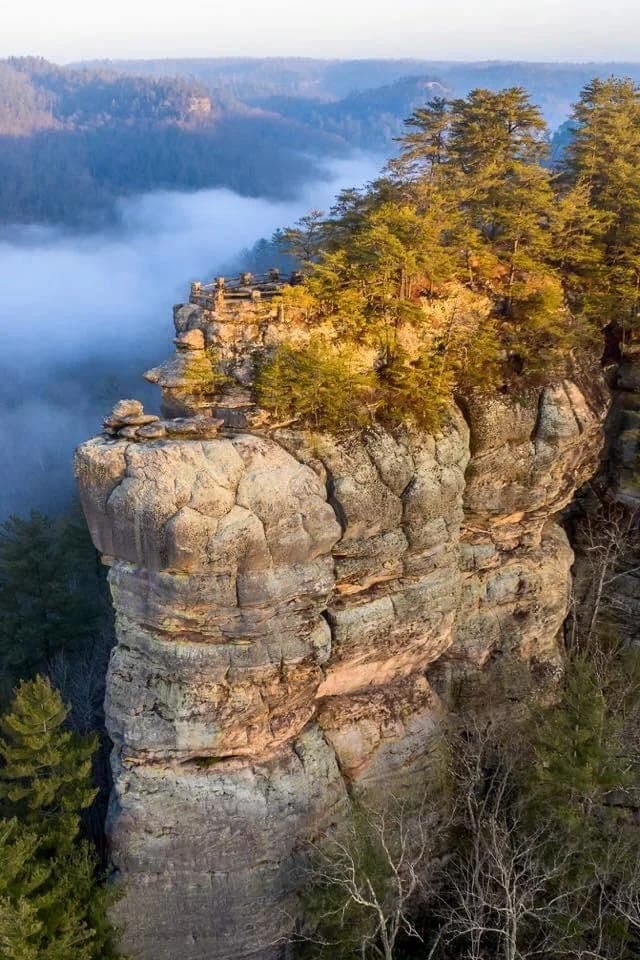
When I tell people I'm building a resort in Kentucky, I get the same look almost every time. A pause. A polite nod. And somewhere behind the eyes, the obvious question nobody quite says out loud: what is in Kentucky?
Fair question. I'll answer it.
The land sits in the Red River Gorge, a canyon system carved into the eastern edge of the state over the last 350 million years. Sandstone cliffs, more than a hundred natural stone arches, rock shelters, waterfalls, and the largest collection of arches east of the Rockies. It's a National Natural Landmark and a National Archaeological District. Daniel Boone walked through here in the 1700s. People have been coming ever since.
The climbing is what put it on the map. "The Red," as climbers call it, ranks among the top climbing destinations in the world. Not in the country. In the world. The bolted, overhanging sandstone pulls people from every continent, and they plan whole trips around it. Miguel's Pizza in Slade has been the unofficial heart of that community since 1984, the kind of place where the directions to half the crags start with "from Miguel's, turn..."
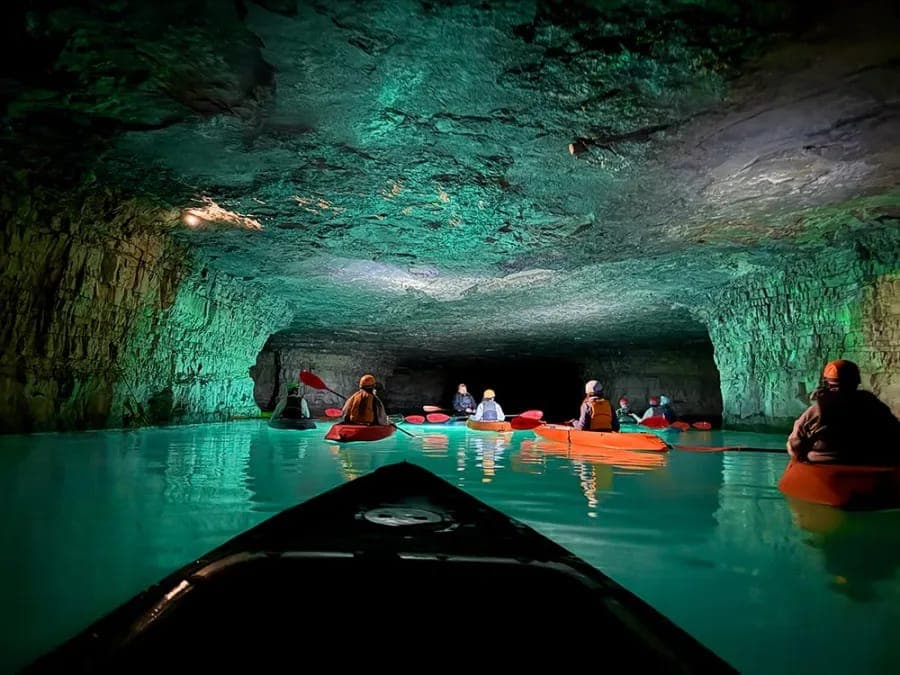
But you don't have to climb to feel why this place matters. There are over 60 miles of hiking trails. You can kayak the Red, designated a Kentucky Wild River. There's a via ferrata, the first one built in America, a climbing route where the cliff is rigged with steel cables and iron rungs so anyone can scale it, no experience required. Underground kayaking through flooded cave systems. A scenic byway that loops 46 miles through the whole thing. Gray's Arch, Auxier Ridge, Natural Bridge. More than a million people come through every year, and the number has climbed steadily since the pandemic. Most of them leave already planning the next trip.
The Gorge keeps a rhythm, too. Spring and summer bring the climbers and the paddlers. Then fall arrives, and the whole canyon turns. The hardwoods go red and orange and gold across the cliff walls, and it becomes the busiest season of all. People drive in just to watch the leaves change from a ridgeline. Locals will tell you that's when folks fall in love with the place and start asking how they can stay longer. I understand the feeling. It's more or less how I ended up here.
Now here's the part that made me choose this specific piece of ground.
Our land sits minutes from the heart of all of it. The Nada Tunnel, the one-lane stone gateway most people drive through to enter the Gorge, is about fifteen minutes away. Natural Bridge is right there. The trailheads, the climbing, the river, the byway. A guest staying with us isn't making a trek to the attractions. They're already inside them.
And then there's the math that actually protects this thing.
When I was looking for land, I had two hard requirements. Built-in tourism, and drivable feeder cities. This spot has both. Lexington is about an hour away. Louisville and Cincinnati are each about two hours. Columbus, Knoxville, Nashville, all within a half-day's drive. More than a million visitors a year, and the cabins to host them haven't kept pace with the people who want to come.
The drivable part isn't a nice-to-have. It's the hedge. When the economy tightens, the first thing people cut is the expensive flight to somewhere far. What they don't cut is the need to get away. A couple in Cincinnati might cancel Europe. They'll still get in the car on a Friday and drive two hours for something they can't get anywhere else. Built-in demand plus a tank of gas beats a destination that only works when everyone's flush.
So that's what's in Kentucky. A world-class landscape an hour from where a lot of people already live, in a part of the country most people have never thought to look.
I didn't have to think about this one for long. Plenty of land is pretty. Less of it is positioned. This piece was both, and the numbers only confirmed what I already felt standing on it.
More soon,
Jeremy
Get the next letter when it is written. Join the newsletter.