A cave in Ohio
April 21, 2026
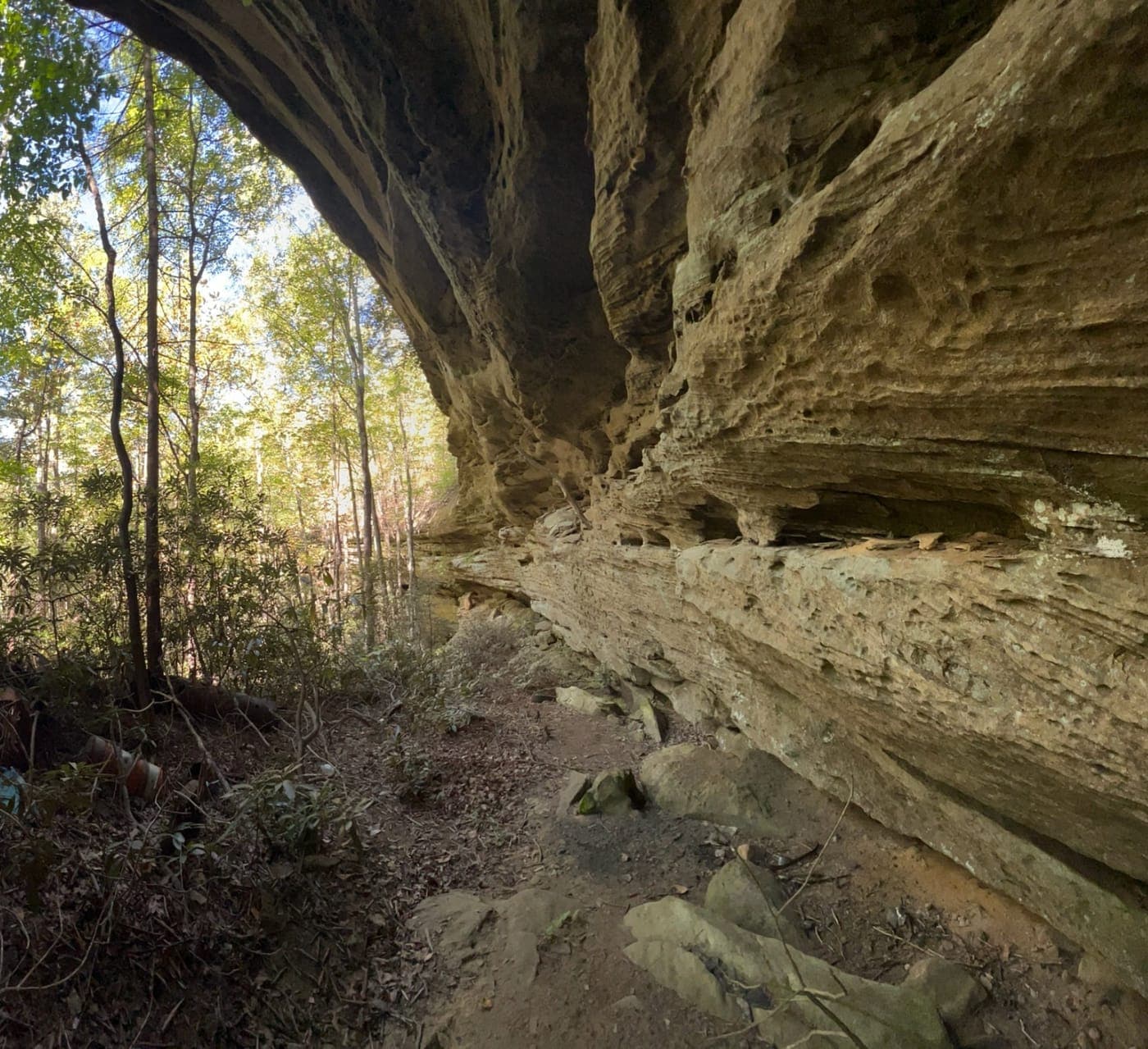
The first entry ended with me standing in a sandstone bowl in Kentucky. This one starts with a cave house in Ohio.
The place is called Dunlap Hollow, in Hocking Hills. Amy and Bryant Gingerich, the couple who built it, turned a natural recess in a sandstone cliff into a cave house you can actually stay in. A real cave. Not a cabin dressed up to look rustic.
The second I saw it, I knew I wanted to build my own version. Not a copy. Something that took the same principle (stay inside a formation nobody could replicate) and made it mine, in a place that was mine.
From there I worked backward into three criteria. The land needed formations I couldn't fake with money or design. The regulatory environment had to let me build what I was picturing. And tourism had to already be flowing through the area. I wasn't trying to invent demand, I was trying to meet it.
Red River Gorge checked all three. Sandstone the earth has been shaping for hundreds of millions of years. A stretch of eastern Kentucky where the rules still let you build something unusual. And a steady flow of hikers, climbers, and weekend travelers from Cincinnati, Lexington, Louisville, and Columbus, a tourism engine that's been humming for decades.
So I opened Zillow. Filtered for land in the gorge. Typed one word into the keyword field: cave.
The first result was the 11.5 acres.
The listing photos were enough. I knew before I'd walked the property that this was it.
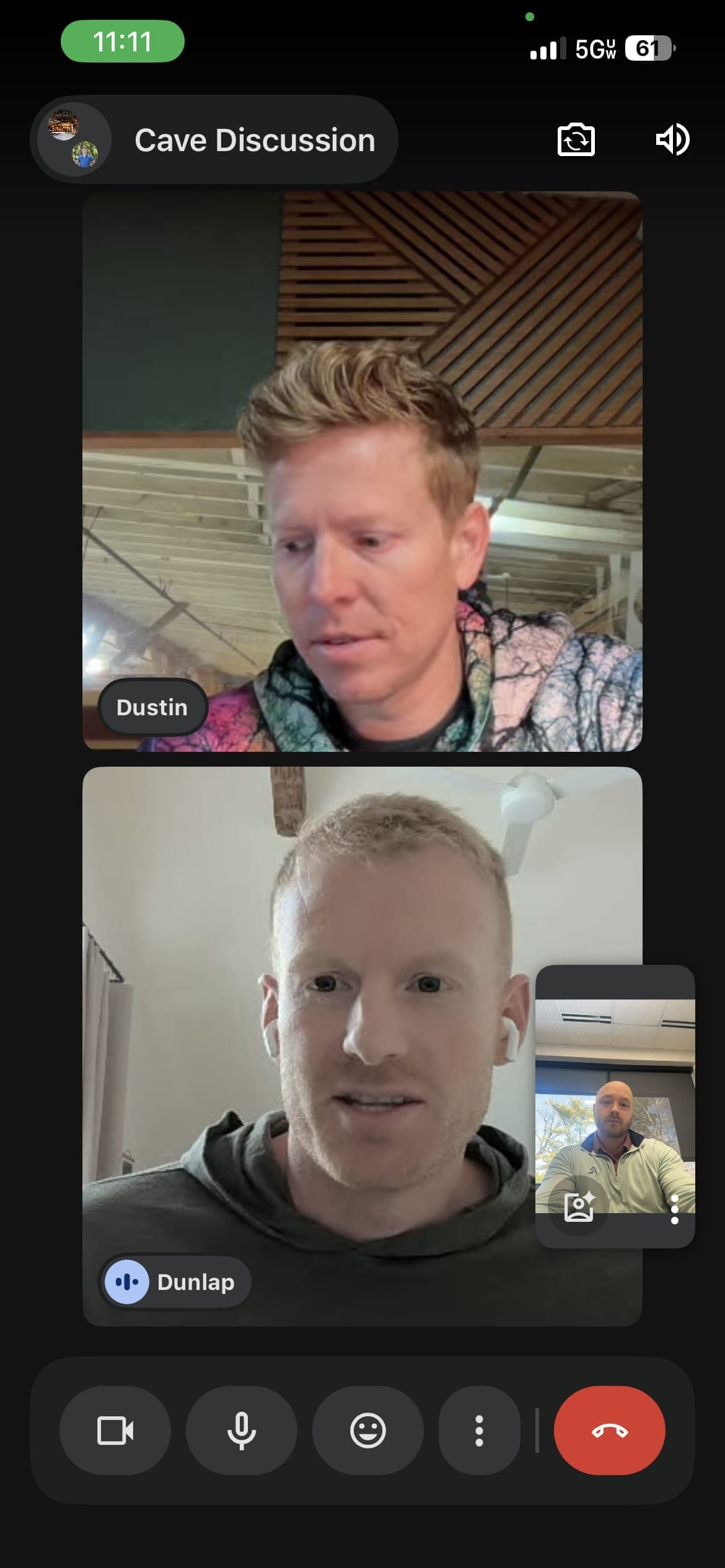
Before I closed, I got on a call with their team. My partner Dustin from O2 Treehouse joined us. We spent hours walking through what they've learned operating a cave house. What worked. What they'd do differently. The specific risks of building inside a sandstone formation that don't show up in any zoning code. I wanted to learn from people who'd already lived through the questions I was about to ask.
If you want to see what got this whole idea started, their cave is bookable at dunlaphollow.com/cave.
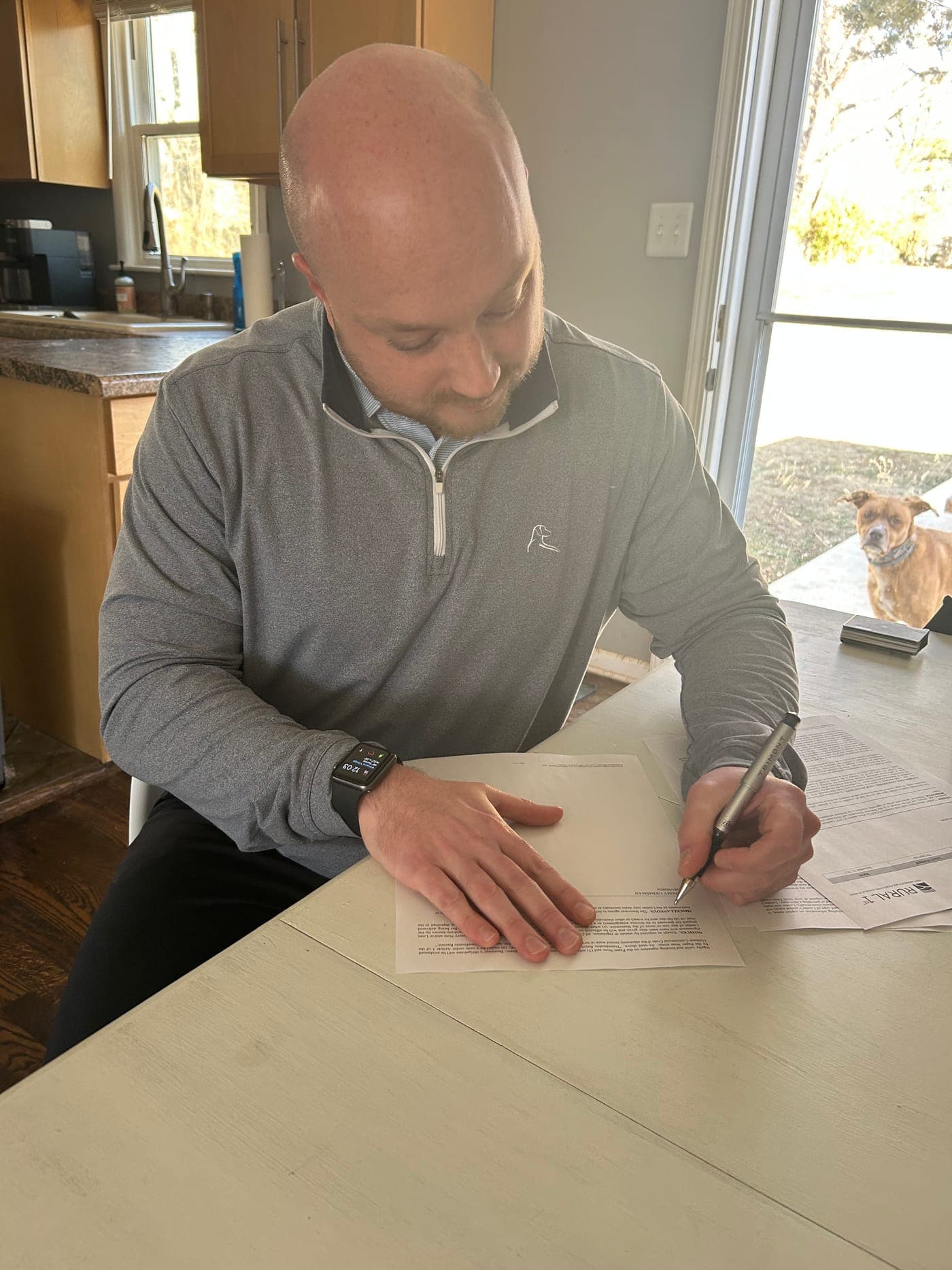
I signed the closing documents in December. Milly came along. Her face in the photo says what every reasonable observer was probably thinking: what exactly are you doing?
I started spending real time on the land after that. What the photos couldn't show was the shape of it. The 11.5 acres open into a small sandstone bowl at the center. Not a canyon. Not a cliff. A bowl. Sandstone walls curl up around it, the shape of something cupped in a hand. Mature hardwoods fill the interior, trees old enough that summer noon reads like late afternoon on the ground. The rest of the property rolls from a creek on the west up to a wooded ridge on the east, but the bowl is the heart of it.
Site inspections followed. Multiple visits walking every square foot of the property. Marking where each unit could sit, where the access road needed to flex, where utilities would run. Every one of those decisions came back to the same question: how does the guest experience this? Each unit has to feel like its own private world. Not a row of cabins sharing a clearing.
More soon,
Jeremy
Get the next letter when it is written. Join the newsletter.